


Thermomix TM7 – Comprehensive Market Analysis & Review
Updated: Sep 2, 2025
The Thermomix TM7 is Vorwerk’s latest all-in-one smart cooker, combining functions of a blender, food processor, mixer, steamer, and more into one appliance. It’s the long-awaited successor to the TM6, launched in 2025, and it aims to streamline virtually every cooking task in the kitchen.
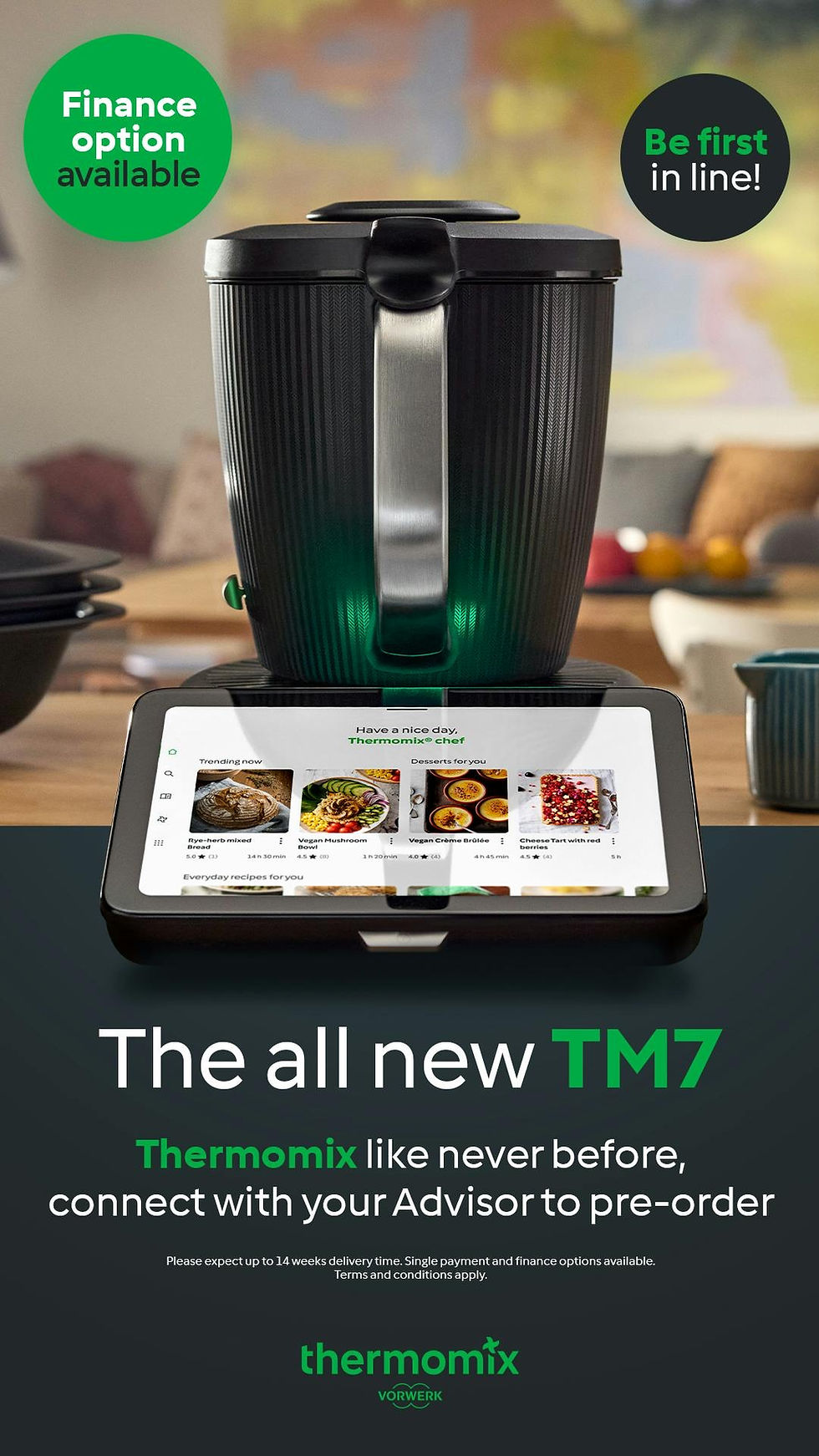
The TM7 has already generated massive buzz in the first few months of launch, reflecting the strong enthusiasm for this model. Priced at £1,349 in the UK (€1,599 in Ireland), it’s a premium investment, but one that promises to replace 20+ kitchen appliances with a single, compact device.
In this analysis, we’ll summarise key features and improvements of the Thermomix TM7, distill what early reviews are saying, compare the TM7 against its competitors (Magimix, Kenwood, Ninja, and more), and address frequently asked questions to help you decide if it’s worth buying (or upgrading to) this revolutionary kitchen gadget.
Thermomix TM7 Overview & Key Features
The Thermomix TM7 is often described as a “kitchen robot” or all-in-one cooker, capable of chopping, blending, mixing, kneading, sautéing, steaming, whisking, grinding, cooking, and more – all with one base unit and bowl. Here are the standout features and specs of the TM7:
Large Touchscreen & Smart Guidance: The TM7 sports a 10-inch color touchscreen (up from 6.8″ on the TM6) that is highly responsive – even with greasy or wet fingers. The interface provides step-by-step Cookidoo guided recipes, accessing a library of 100,000+ recipes via Wi-Fi on the device. Users get a 3-month Cookidoo subscription included, then can subscribe annually to keep accessing the ever-growing recipe library. The screen improvements make following recipes even easier, and you can now search recipes and adjust portions directly on the TM7 without needing the phone app.
Powerful Motor with Quiet Operation: The TM7 has a high-performance motor that is quieter at lower speeds than previous models. For example, gentle stirring and simmering modes are much less noisy – a big plus for open-plan kitchens or sleeping babies in the house. (Do note, at maximum speed the TM7 can still be ~80+ dB loud, similar to the TM6’s noise on high) The motor can handle heavy dough kneading and high-speed blending with ease, and the built-in scale (now up to 3kg capacity) means you can weigh ingredients right in the bowl even during manual cooking – no separate scale needed.
Heating & “Open Lid” Cooking: Like its predecessor, the TM7 has an integrated heating element that cooks up to 160 °C for high-heat functions such as searing or caramelising New to the TM7 is an “Open Cooking” mode, which allows you to cook or sauté with the lid off at lower speeds (up to speed 1–2 and 100 °C). This open-lid capability is great for techniques like reducing sauces or browning ingredients as you would in a pan, giving more control and visibility while cooking – a feature that testers found “perfect for reducing sauces or searing vegetables and meats”. There’s also a dedicated Browning mode for high-heat searing (lid on, up to 160 °C), plus modes for slow cooking, sous-vide, fermentation, etc., totaling 20 automatic modes in the TM7 (versus 17 in TM6)
Improved Design & Accessories: Visually, the TM7 has a sleek modern design with a black insulated bowl housing and a brushed metal handle. The 2.2 L stainless-steel mixing bowl now comes with a pleated insulation cover, so it stays cool-to-touch on the outside even when cooking at high heat. This makes the unit safer and more energy-efficient (it holds heat in better), though it does make the bowl slightly heavier than the TM6’s. The lid mechanism has been redesigned: the TM7 uses a magnetic lid lock (replacing the TM6’s mechanical arms), which locks/unlocks faster and with audible feedback for a smoother user experiencec. The Varoma steaming attachment also got a boost – it’s 45% larger in capacity than before, allowing you to cook bigger batches of vegetables, fish, or even a whole chicken in layers. Despite the larger Varoma, all TM5/TM6 recipes remain fully compatible since the bowl size is unchanged (the Varoma just offers more steaming volume). Other accessories include a revamped spatula (improved ergonomics), measuring cup, butterfly whisk insert, internal simmering basket, and more. (Note: a new optional Thermomix Cutter attachment – for slicing and grating – is available for the TM7, but it’s sold separately and not interchangeable with the TM6’s cutter)
Connectivity & Updates: The TM7 is Wi-Fi connected, enabling not just recipe syncing but also firmware updates that can add new functions over time. Vorwerk has a track record of pushing software upgrades to add features (e.g. new modes) to Thermomix devices. The Cookidoo app integration means you can plan recipes on your phone and send them to the TM7, or even browse recipes on the machine while it’s already cooking something else. In short, the TM7 acts like a smart IoT appliance that keeps improving, and Vorwerk’s robust support (incl. local service centers and advisor network) ensures buyers can maintain and learn their machine for years.
In sum, the Thermomix TM7 is a feature-packed, technologically advanced cooking appliance. It builds on Thermomix’s core strength – versatility – with incremental improvements that make cooking more convenient: a bigger and better screen, quieter operation, smarter guided cooking, and thoughtful design tweaks for safety and ease of use.
What Do the Reviews Say? – TM7 Performance and Feedback
Early reviews and hands-on tests of the Thermomix TM7 have been largely positive, highlighting its improved user experience and solid performance, while also noting a few limitations. Here’s a roundup of the key insights from reviewers and experts:
Intuitive and Easy to Use: Testers consistently praise the TM7’s ease of use. The large touchscreen interface is described as “very intuitive and easy to follow”, even for beginners. Fiona Mair, a kitchen expert at CHOICE, was impressed that “even with greasy or wet hands the screen remained responsive to touch”choice.com.au – a small but crucial detail when cooking. The guided recipes and on-screen prompts make it feel like “having a tutor with you for every recipe,” lowering the barrier for those new to advanced cooking techniques. Reviewers also appreciate the faster lid locking mechanism and overall modern feel of the device.
Cooking Performance: In professional lab tests, the TM7 scored well across a range of tasks. CHOICE’s chefs put it through dozens of recipes – from whisking egg whites and kneading dough to chopping veggies and even delicate tasks like making mayonnaise – and found the TM7 “pretty impressive across the range of our performance tests” choice.com.au, handling most tasks with aplomb. Notably, the new open-lid cooking mode was highlighted as a successful improvement: “being able to view the food while it’s cooking gives better control…and is perfect for reducing sauces or searing”, said one expert tester. The heating accuracy is improved over the TM6, maintaining steady simmering and precise temperatures for things like sous-vide, though one review noted it’s still not as pinpoint-precise as some competitors like the Bosch Cookit in temperature control reddit.com. The TM7’s quieter motor at low speeds also makes a difference – it’s practically silent when gently stirring or slow cooking, which is a welcome change for daily use. At high blending speeds (e.g. speed 10), noise levels are still high (~81 dB in tests, similar to a loud street), but for many users those max speeds are used briefly (e.g. for pureeing). Importantly, safety features have been further refined – the TM7 won’t allow high-speed blending when hot ingredients are cooking (it forces a cut-out or requires pause) and the improved lid venting prevents pressure build-up, addressing concerns from earlier models.
Quality of Life Improvements: Longtime Thermomix users notice and appreciate the “small refinements” in TM7. For instance, the insulated bowl cover keeps the exterior cool so you’re less likely to burn your hands, and it also helps foods stay warm longer after cooking (one user noted they could cook lunch at 11am and it was still hot at 1pm in the bowl). The integrated scale now works during manual cooking steps (no need to exit to a scale screen), which fans of freestyle cooking loves. The TM7 is also reported to be less “jumpy” on the counter due to improved suction feet and weight distribution – a subtle fix from TM6. The bigger Varoma earned praise for those who steam a lot; one blogger called it “brilliant…one of the best features of the new model” skinnymixers.com.au. Another seemingly small change is the blade assembly – it has been optimized for easier removal and cleaning, so you no longer have to “wrestle” to twist out the blade from the bowl. All these tweaks contribute to a more polished experience that reviewers say “make everyday cooking nicer, rather than a dramatic leap” in functionality.
Common Criticisms: No product is perfect, and the TM7 has a few noted downsides or critiques mentioned by reviewers:
High Price: The Thermomix has always been expensive, and at over £1300 the TM7 is a major investment. Reviewers acknowledge the price is steep, and some debate whether it’s “worth it.” However, many also echo the sentiment that “with all-in-one appliances, you get what you pay for” – the Thermomix’s performance, build quality, and support ecosystem tend to outshine cheaper rivals. (We’ll explore cheaper alternatives later in the comparison section.)
Long Wait Times: Due to very strong demand, early buyers experienced long delivery wait times of up to 14 weeks now reduced up to 10 weeks. This is a testament to popularity, but frustrating if you’re eager to get one quickly. Vorwerk has been ramping up production to catch up with orders.
No Transparent Lid: Unlike some blenders or food processors, the TM7’s lid is opaque (and now lacks the small measuring cup opening that the TM6 had). This means you cannot see inside the bowl without pausing and unlocking the lid. A few reviewers found this inconvenient, especially when chopping – it’s easier to over-chop to a puree if you can’t visually monitor progress. The TM7 does have a “turbo pulse” mode to help with controlled chopping, but the learning curve is there. Also, adding ingredients mid-cook requires pausing and opening the lid (since only small vent holes exist now for steam), so no pouring in a cup of flour on the fly.
Cleaning the Lid and Bowl: The TM7 is generally easy to clean – it even has pre-clean modes to help loosen dough or grease. All removable parts are dishwasher-safe (except maybe the sharp blade, which is best hand-washed for longevity). However, the lid has more crevices (due to the locking mechanism and vent holes) and can trap odors in its rubber seal. Several users note the lid is “harder to clean” than the previous model. A tip is to use baking soda to deodorize the seal if it picks up strong food smelss The bowl’s new insulating jacket is removable for cleaning, but that adds an extra step. Overall maintenance is still easier than a multi-pot, multi-pan meal, but future iterations might improve lid design for cleaning.
Backward Accessory Compatibility: Some accessories from TM6 are not compatible with TM7. Notably, the Thermomix Cutter (slicer/shredder disc) that was introduced late in the TM6’s life requires a new version for TM7 – the TM6’s “Découpe-Minute” won’t fit the new bowl. This means if you upgrade, you may need to buy the new Cutter (around £150/€16functionality. Similarly, extra bowls from older models won’t latch into the new base due to the redesigned locking system. This isn’t a deal-breaker for new owners, but upgraders should be aware of additional costs. On the plus side, smaller accessories like the Blade Cover/Peeler and Butterfly Whisk are cross-compatible with TM7.
Performance Quirks: A few specific cooking tests revealed minor weaknesses. For example, CHOICE’s team struggled to get meringue (whipped egg whites) to stiff peaks on the TM7, resulting in only a “borderline” performance on that task. Also, when searing or sautéing a large quantity of food (like browning meat for a stew), the TM7’s relatively small heated surface means you must do it in batches for best results (otherwise food might stew or stick). This is inherent to its bowl design – even though it hits 160 °C, it’s not a wide frying pan. Serious chefs might still prefer a skillet for big browning jobs. Lastly, some owners note that high-speed milling or blending for extended periods can heat up contents slightly via friction (e.g. smoothie getting warm); using frozen ingredients can counteract this.
Despite these caveats, the overall reception is that the TM7 is a triumphant evolution of the Thermomix. It doesn’t reinvent the wheel, but it makes the cooking experience more enjoyable and efficient. As one seasoned user summed up: “The TM7 feels like the ultimate evolution in smart cooking… not a dramatic leap, but thoughtful upgrades that make everyday cooking nicer”. And importantly, it retains Thermomix’s core value: delivering reliable results across countless recipes.
The device’s longevity also came up in reviews – Thermomix models are known to last a decade or more if cared for, and many owners still use their older TM5/TM31 daily. Vorwerk backs the TM7 with a 2-year warranty in the UK, and even longer motor guarantees in some markets. All signs indicate the TM7 is built to serve as a kitchen workhorse for years, helping justify its premium price tag for serious home cooks.
Thermomix TM7 vs Competitors: How Does It Stack Up?
The Thermomix virtually created the category of high-end all-in-one kitchen machines, but it’s no longer alone. There are several competing appliances aiming to win over those considering a TM7. Here we compare the Thermomix TM7 to some of its prominent competitors in the UK/Ireland market (and a few noteworthy alternatives globally):
Thermomix TM7 vs Magimix Cook Expert
Overview: The Magimix Cook Expert is often called “the French Thermomix.” It’s a premium multi-cooker/food processor that, like Thermomix, can heat, blend, chop, and mix. Both the TM7 and Magimix Cook Expert target the high-end segment, with similar price points (~£1,195–£1,300 for Magimix vs £1,349 for TM7). Here are key differences:
Functions & Attachments: Both machines perform core tasks like chopping, blending, kneading, simmering, and steaming. However, Magimix takes a more traditional food processor approach by including multiple bowls and blades for different functions. It comes with a food processor attachment (with slicing and grating discs) and three nesting bowls, which let it do things like shredding vegetables or grating cheese natively The Thermomix, by contrast, uses its single blade and clever speed control for everything – it doesn’t slice or grate without an add-on cutter accessory. So out of the box, Magimix has an edge for food-processing tasks like slicing, thanks to dedicated attachments. On the other hand, the TM7’s approach means quicker cleanup and transitions, since you don’t have to swap bowls/blades for different steps.
Cooking & Heating: Both have powerful heating elements with induction heating up to ~160 °C for browning. In practice, both can sauté onions and even caramelize sugar. The TM7 introduces open-lid cooking, which Magimix doesn’t explicitly support (Magimix is generally used with lid on, though you could stir manually if needed). This means you can fry or cook in the Thermomix with the lid off on low speeds – handy for certain recipes (the Kenwood and Ninja also allow open-lid, as we’ll see). Magimix’s metal bowl is larger (3.5 L) vs Thermomix’s 2.2 L. This means Magimix can cook for a crowd (6–8 portions) more easily in one go. The TM7’s bowl handles about 2–4 portions comfortably (or more if it’s soup), though the Varoma lets it cook additional food on top. If you regularly entertain or batch cook, Magimix’s capacity might appeal – but remember, a larger bowl can be less efficient for small quantities (Thermomix heats faster and blends small amounts better due to its size).
Tech & Interface: Thermomix is a smarter, connected device. The TM7’s big touchscreen with built-in guided recipes is a major selling point – you get interactive instructions and auto settings for each step. Magimix Cook Expert has a more basic LCD display with buttons/knob and relies on a recipe book or companion app for guidance. There is no on-board recipe guidance on the Magimix itself. So while both have “manual” mode and preset programs, the TM7 feels more high-tech and user-friendly for novices. The TM7 will also get updates over Wi-Fi (new modes, bug fixes), whereas Magimix’s firmware is not user-updatable in the same way.
Recipe Ecosystem: Thermomix has an unrivaled recipe ecosystem: over 100,000 official guided recipes on Cookidoo (spanning worldwide cuisines) plus a huge community generating their own recipes and tips. Magimix offers hundreds of recipes (in its app and book) – plenty to get started, but nowhere near the variety of Thermomix. Additionally, because Thermomix is so popular globally, there are Facebook groups, blogs, and cookbooks dedicated to it. Magimix, while loved by its users, has a smaller English-speaking community by comparison. If you love experimenting with new recipes frequently, Thermomix provides far more content and community support out-of-the-box.
Ease of Use & Cleaning: The TM7’s one-bowl-does-it-all design means you typically wash one bowl and blade after cooking a full dish (and it even has a self-clean mode). The Magimix’s extra attachments (food processor blades, etc.) mean more parts to clean if you use them, and possibly more storage space needed. Both bowls are dishwasher safe. Users note that Magimix is quite straightforward to operate, but Thermomix’s guided cooking can save time and reduce mistakes, especially for complex recipes. It’s the difference between a high-quality appliance (Magimix) and a full cooking system (Thermomix with its software and support).
Warranty & Build: Magimix offers an impressive 30-year guarantee on its motor, and a 3-year overall warranty. This speaks to its solid build (Magimix is famous for durable food processors). Thermomix TM7 comes with a standard 2-year warranty. Both machines are engineered to last well beyond the warranty – it’s not uncommon to see 10+ year old Thermomix or Magimix units still in use. That said, Magimix touts that long motor guarantee as a peace of mind for the investment.
Price & Value: In the UK, the prices are roughly comparable (around £1.2–1.3k). Magimix often includes its full suite of accessories in that price, whereas Thermomix’s extras (e.g. blade cover, cutter, second bowl) are sold separately. Thermomix, however, offers 0% financing plans (roughly £30-35/month) which Magimix doesn’t directly offer. This can make Thermomix more accessible to some buyers. Both are expensive, but if used daily, many owners say they’re worth it.
Verdict – Thermomix vs Magimix: Both are excellent multi-cookers, but they cater to slightly different priorities. If you value ease-of-use, smart features, and a huge recipe library, the Thermomix TM7 is the winner – it’s like having an interactive chef guiding you, ideal for all skill levels. The TM7’s convenience (quick cleaning, fewer parts, all-in-one cooking) makes it shine for busy households. On the other hand, if you need larger capacity or want a more traditional food processor capability (slicing, grating) in your cooker, the Magimix Cook Expert has an edge. It might also appeal to those who prefer a simpler, analog-style appliance without being tethered to subscriptions or software.
For most UK home cooks, Thermomix’s versatility, support network, and ongoing updates give it a strong advantage, justifying its slightly higher price Unless you regularly cook for 8+ people or bake in huge batches (where Magimix’s big bowl shines), the TM7 offers a more versatile and user-friendly experience for the average kitchen.
Thermomix TM7 vs Kenwood Cooking Chef XL
Overview: Kenwood’s Cooking Chef XL is a hybrid of a classic stand mixer and a cooker – imagine a high-end Kenwood mixer that can also heat and stir. It’s a bit of a different beast compared to Thermomix. The Cooking Chef XL is fantastic for serious bakers or those who want the power and capacity of a stand mixer with cooking ability. It overlaps with the TM7 in being an “all-in-one” machine, but with a more professional kitchen approach. Key comparisons:
Mixing & Attachments: The Kenwood Cooking Chef is, at heart, a full-fledged stand mixer. It comes with attachments like a whisk, dough hook, paddle beater, etc., and even includes a separate food processor bowl and blender jug that attach on top for chopping/blending tasks. In contrast, Thermomix uses one blade for mixing, kneading, whipping (with a small butterfly attachment) – it’s very clever, but it cannot mimic a balloon whisk or handle extremely heavy dough in large quantities like the Kenwood can. For example, whisking egg whites or cream to perfection is easier in the Kenwood’s big bowl with an actual whisk attachment, whereas Thermomix can do it but in smaller volume and sometimes less fluffiness. If you frequently bake large batches of bread or cakes, the Kenwood (with its 6.7 L bowl) can handle ~2-3× the quantity the Thermomix can. However, Thermomix excels at fine chopping, blending and small quantity tasks that the Kenwood would require its processor or blender jug for (and those aren’t as integrated experience). It’s a bit of a trade-off: Thermomix = convenience (one bowl, auto settings) vs Kenwood = capacity and specialty (especially for baking).
Cooking & Heating: Both machines can cook directly in their main bowl. The Kenwood Cooking Chef XL has an induction system that heats up to 180 °C, slightly higher than Thermomix’s 160 °C. Practically, both can sear and sauté. The Kenwood actually allows open-lid cooking freely (since it’s like a pot on a heater – you can just not use the lid if you want to stir/fry manually). Thermomix’s new open-lid mode still has some automation limits (stirring only at low speed). Kenwood’s bigger bowl can cook larger stews or curries; you could e.g. sear a lot of meat at once. Thermomix’s advantage is automation – it stirs for you, tells you when to add ingredients, etc., whereas the Kenwood is more manual in operation (you set temperature, time, stir speed yourself or via app recipes). If you enjoy the cooking process and don’t mind tending the machine a bit more, Kenwood offers more of a chef’s experience. If you prefer a set-and-forget, guided approach, Thermomix wins there.
Tech Integration: Thermomix TM7 has the built-in screen and all-in-one guided cooking. Kenwood has something called the Kenwood World app: you use a tablet/phone to select recipes and it can sync with the machine, setting temperatures and timers accordingly. It’s a neat feature, but not as seamless as having the recipe on the machine itself. Essentially, with Kenwood you might be swiping on your iPad with messy hands, whereas with TM7 you swipe on the appliance (which is designed to handle that). Kenwood’s recipe library is also much smaller than Thermomix’s, and the community is not as large or active. So, tech-wise, the TM7 feels more “smart kitchen” while the Kenwood feels more like a traditional appliance with a tech add-on.
Capacity & Baking Prowess: If you are an avid baker, Kenwood might be enticing. It’s almost like having a KitchenAid Pro mixer that also cooks. It can knead heavy bread dough (it has a 1500W motor and can knead for longer durations without overheating). The TM7 can knead up to about 500g of flour into dough (~2 loaves worth) in one go which suffices for most home use, but the Kenwood can do double or triple that in its larger bowl. For making things like delicate custards or sauces, both do well, but the Kenwood’s precise attachments might give slightly better results for things like sabayon (whisked over heat) or tempering chocolate, because you have more manual control. Conversely, Thermomix can do unique tasks like grinding flour, icing sugar, or nut butters with its blades – tasks the Kenwood would need separate accessories for or can’t do at all. Each has some specialty edges.
Cleaning & Convenience: The Thermomix is simpler to clean for most multi-step recipes. With a Kenwood, if a recipe calls for chopping, then cooking, then blending, you might use the food processor then the main bowl, then perhaps the blender – that’s multiple big items to wash. Thermomix would do it sequentially in one bowl (maybe a quick rinse in between steps). Also, swapping attachments on Kenwood (like from mixer paddle to dough hook) is an extra step; Thermomix requires no attachment swap except adding the butterfly whisk for whipping. Kenwood’s parts (heavy stainless bowl, whisk, etc.) are all high quality but take up space in your dishwasher or drying rack. This illustrates the convenience vs. versatility trade-off: Thermomix is ultra-convenient and quick to transition between tasks; Kenwood is ultra-versatile in the sense of being a complete stand mixer + cooker, but demands a bit more effort from the user.
Price: The Kenwood Cooking Chef XL is actually priced slightly lower than Thermomix in the UK – roughly £1,099 for the base pack. This often includes the extra blender jug and processor attachment, so it’s fairly good value given all the hardware. Thermomix at £1,349 includes its standard accessories (bowl, Varoma, etc.) but, as noted, things like a slicing disc are extra. Both are in the premium bracket. Both can also be financed (Kenwood via retailers, Thermomix via Vorwerk advisors like LifeWithThermomix).
Support & Buying Experience: Thermomix is sold via direct sales (advisor/consultant) in UK/Ireland, meaning you often get a personalized demo and someone to reach out to for questions. Kenwood is sold in stores/online retailers; while they have customer service, you won’t get that personal training. Thermomix also has a passionate user base (if you need a recipe for something, chances are someone’s shared a Thermomix version). Kenwood’s community is more about baking/mixing enthusiasts in general, not as specific to the machine.
Verdict – Thermomix vs Kenwood: These two appeal to different kinds of cooks. The Kenwood Cooking Chef XL is ideal for advanced home cooks or baking enthusiasts who want the power and feel of a traditional mixer/cooker combo. It’s like having a semi-professional setup – great for those who bake big batches of bread, host large dinners, and don’t mind a bit of extra tinkering. The Thermomix TM7, on the other hand, is perfect for those who value simplicity, automation, and time-saving in everyday cooking. It’s optimized for the home cook who wants to put a variety of meals on the table with minimal fuss and consistent results. For busy families, or individuals who might not have the confidence or time to cook everything from scratch, the Thermomix’s guided approach is a game changer. It handles the bulk of cooking tasks automatically, from stirring a risotto to steaming a whole meal in layers, which the Kenwood would require more manual input to accomplish.
Many users actually find that Thermomix covers 95% of their needs, and only very serious bakers might feel the Kenwood’s added value. In summary: If you’re primarily comparing these two, most everyday cooks in the UK/Ireland who ask “Which should I get?” end up happier with the Thermomix because it simplifies cooking more and comes with an unmatched ecosystem. The Kenwood is a dream machine for a specific niche – you might even see some who own both: a Thermomix for general use and a Kenwood for heavy-duty baking. But if it’s one or the other, think about whether you prefer a high-tech all-in-one assistant (Thermomix) or a powerful multi-component mixer that also cooks (Kenwood).
Thermomix TM7 vs Ninja Foodi (15-in-1)
Overview: Comparing Thermomix to a Ninja Foodi is almost like comparing apples to oranges – they are very different kinds of appliances. Yet many shoppers consider them side-by-side because both are marketed as “all-in-one cookers.” The crucial distinction: Thermomix is an all-in-one preparation and cooking appliance, while Ninja Foodi is an all-in-one cooking methods appliance. For this comparison, we’ll reference the Ninja Foodi 15-in-1 SmartLid (one of Ninja’s top multicookers) as an example. Key points:
Core Purpose: The Thermomix’s strength is in food preparation + precise cooking. It weighs, chops, blends, stirs, and cooks – effectively automating the making of a dish from raw ingredients to finished product (think: chopping veggies, then sautéing them, then simmering into a soup in one machine). The Ninja Foodi’s strength is in versatile cooking techniques like pressure cooking, air frying, slow cooking, etc. But a Ninja cannot chop or blend raw ingredients the way Thermomix can (it has no blades for that kind of prep). If your goal is to simplify meal prep and have one device replace your cutting board, blender, and stovetop pot, the Thermomix is the clear winner. If your goal is to speed up actual cooking of full dishes (say, pressure-cook a stew in 30 minutes, or air-fry chips), the Ninja shines in ways Thermomix cannot.
Functions Comparison: There is some overlap, but largely the functions differ:
Thermomix TM7 functions: Chop, mix, purée, grind, emulsify, knead dough, cook (boil, simmer), steam, sous-vide, slow cook, ferment, whip, etc., all with precision and hands-free stirring. It replaces devices like a blender, food processor (minus slicing), stand mixer (to some extent), coffee/spice grinder, soup maker, etc. It cannot pressure cook or air fry or bake.
Ninja Foodi 15-in-1 functions: Pressure cook, air fry (crisp), steam, slow cook, bake/roast, grill, dehydrate, sear/sauté (with the lid open), make yogurt, etc. Essentially, a Ninja Foodi combines a pressure cooker and an air fryer in one unit (the “SmartLid” models have one lid that does both). It replaces devices like a standalone pressure cooker (or Instant Pot), an air fryer, an oven for roasting, and even a basic slow cooker. But it does not replace your blender, food processor, or the act of chopping ingredients – you still have to prep ingredients separately.
Both can sauté and slow cook, which is an overlapping area. For instance, you could slow-cook a stew in either one. The difference is with Thermomix you could also chop all the ingredients and sauté them in the same bowl first; with Ninja, you’d likely chop everything by hand, maybe sauté in the Ninja (it has a “sear/sauté” function), then pressure cook or slow cook in it.
Cooking Style & Results: The Thermomix is great for soups, stews, sauces, curries, risottos, custards, doughs – dishes that require stirring or emulsifying and benefit from precision. It’s also excellent for making things from scratch like nut milks, bread dough, jam, baby food, etc., because it handles both the pulverizing and the cooking. The Ninja Foodi is great for roasted, fried, or braised dishes – e.g. roast chicken, air-fried chips (fries), crispy pork belly, pulled pork, steamed rice, yogurt, and so on. It can cook a whole roast or a large chili con carne in one pot, but you must do the chopping and mixing separately. In fact, some households find Thermomix and Ninja Foodi to be complementary rather than direct competitors, because one preps and cooks from scratch, while the other excels at quick finishing techniques (crisping, pressure cooking).
Ease of Use: Both devices have a bit of a learning curve, but Thermomix’s guided recipes can hold your hand through very complex recipes, making it quite foolproof. Ninja Foodi provides preset programs, but you still need traditional recipe knowledge (for example, knowing how long to pressure cook a piece of meat, or when to use quick vs natural pressure release). There’s plenty of community recipes for Ninja too, but it’s more akin to using a good appliance with manual control or preset times. Cleanup is different: Thermomix has a single bowl with blade (which can sometimes get food stuck but also has self-clean). Ninja has a big non-stick inner pot and a heavy attached lid with sealing ring (for pressure). The Ninja’s pot is easy to wash (often non-stick), but the lid and sealing ring require cleaning and can retain odors (pressure cooker users are familiar with this). Thermomix’s lid and seal can also hold odors, as noted, but those are smaller parts. Also, Ninja Foodi units are quite bulky and tall – you need space on your counter especially when the lid is open. Thermomix has a smaller footprint in comparison.
Capacity: Ninja Foodi typically offers larger capacity – many models have a 6+ liter pot, which is great for large families or meal prep batches. You can cook a big stew or a whole pot roast in a Ninja that simply wouldn’t fit in a Thermomix’s 2.2 L bowl. Also, Ninja can make things crispy (air fry function), which Thermomix cannot (Thermomix steams or boils but doesn’t dry-heat or fry). So if you love crispy chicken wings or roast potatoes, a Thermomix alone won’t do that – you’d have to transfer food to an oven or grill to finish. Ninja excels at those crispy, fried or roasted textures. On the other hand, if your diet leans towards soups, sauces, dips, breads, and blended foods, Thermomix produces those effortlessly. It really comes down to what you cook most.
Price: Here’s a big differentiator. The Ninja Foodi 15-in-1 costs around £250–£300 in the UK for popular models. The Thermomix TM7 is ~£1,300+ – literally 4–5 times the price. That gap is huge. So the question many ask is, “Can the Thermomix really be worth that much more?”. The honest answer: it depends on what you value. If you have a limited budget or mainly want to pressure cook and air fry, the Ninja (or any multicooker) gives tremendous value for money – it will do those specific cooking jobs very well, and you can do a lot with it for a few hundred pounds. However, the Thermomix just does a different array of tasks. It’s replacing your prep devices and enabling from-scratch cooking in a way Ninja cannot. Also, consider longevity: A Thermomix is built to last a decade or more, whereas many cheaper multicookers might last some years but perhaps not as long (and you may end up replacing a Ninja or upgrading in a few years). Thermomix also has strong resale value; used units often sell for a good fraction of their price, whereas used multicookers depreciate more.
Use Cases: If you are a person who loves cooking from raw ingredients (baking bread, making soup from whole veggies, creating sauces from scratch, etc.) and you want to simplify that process, Thermomix is life-changing. It encourages cooking healthier meals from scratch because it makes it so convenient (many Thermomix fans credit it for helping them avoid takeout and cook at home more). If you are someone who wants to get dinner done fast and you frequently cook things like stews, braises, rice, or you love fried foods but want a healthier way (air frying), a Ninja might cater to those needs better. In fact, quite a few UK customers start with a Ninja to see if they use an appliance a lot, and later upgrade to a Thermomix once they realize they want the additional capabilities. Some households even keep both: the Thermomix for prep and “wet” dishes, and the Ninja for crispy or large dishes – using each for what it’s best at.
Verdict – Thermomix vs Ninja: If budget is a major concern and your cooking revolves around quick one-pot meals and crispy comfort foods, the Ninja Foodi offers incredible bang for your buck. It won’t help with chopping or mixing, but it will definitely make weeknight cooking faster (pressure cooking a stew in 30 min, air frying chips with little oil, etc.). However, if you are looking for a tool to revolutionize how you cook and to consolidate many kitchen tasks into one device, the Thermomix TM7 is in a league of its own. For most cooking enthusiasts who want to elevate their from-scratch cooking, the Thermomix’s capabilities justify its cost – it’s essentially an investment in a healthier, more homemade-food lifestyle One analogy: owning a Thermomix is like having a sous-chef that does all the tedious prep and even the cooking while you relax or multitask; owning a Ninja Foodi is like having a really fancy fast-cooking pot/oven that still expects you to be the chef. Many people actually pair them – use a Thermomix to prep dough or soup and a Ninja to bake or crisp something, for example. But if it’s a choice of one, consider your cooking style.
The Thermomix TM7 is unparalleled for creative home cooks who want to do it all (making bread, hummus, curry, ice cream base, you name it), while Ninja Foodi is superb for those who want quick results with classic cooking methods (roasting, frying, braising) without fuss.
(Bonus: If you already have appliances like a good blender or food processor, adding a Ninja Foodi might complement them nicely. But if you have very few appliances and want an all-in-one solution, Thermomix covers far more functions.)
Other Notable Competitors & Alternatives
Aside from the big names above, there are several other multi-cooker or “Thermomix-alternative” products on the market. Here are a few worth mentioning, especially for those in the UK & Europe:
Silvercrest Monsieur Cuisine Smart (Lidl): This is a budget Thermomix dupe that made waves in Europe. Sold by Lidl (when in stock) for roughly €399–€499, it offers almost all the Thermomix TM6 functions at a fraction of the price. The Monsieur Cuisine Smart has an 8-inch touchscreen, built-in scale, and can cook, chop, steam, knead, etc., similarly to Thermomix. It even offers guided recipes (around 3,300 recipes preloaded) and Wi-Fi updates. However, it’s clearly a copycat product – while it does a decent job, it doesn’t have the same polish or massive recipe library (Thermomix has ~90k official recipes vs ~3k on Lidl’s, though you can adapt Thermomix recipes). Also, build quality and support are lower; it’s a great value but may not last as long. In the UK, Lidl’s Monsieur Cuisine availability has been spotty due to legal challenges (Vorwerk pursued action for patent issues). When it does appear, it sells out fast. Tech Advisor noted it’s a “well-made dupe…at a fraction of the price” and a compelling option for budget-conscious buyers.
Tefal / Moulinex Cuisine Companion: Known as Tefal i-Companion or Moulinex Companion (brand name depends on region), this is a French all-in-one cooker that can stir, chop, and cook. It lacks a built-in scale in older models (the newer “i-Companion Touch XL” added a touchscreen and scale). It’s priced lower than Thermomix (roughly £700-£900 for the high-end model). It’s a solid machine with Bluetooth/app recipes, but generally fewer functions and not as powerful (max ~130 °C heating). It also doesn’t have quite the same community or recipe breadth. Still, it’s a reliable mid-range alternative for those who find Thermomix too pricey.
Magimix Cook Expert: We already covered Magimix in detail – it’s one of the closest in spirit to Thermomix and a top-tier alternative in the UK, especially for those who prioritize a larger bowl and integrated food processor capability.
CookingPal Multo: The CookingPal Multo is a newer entrant – a smart cooker that, like Thermomix, guides you through recipes. It uniquely comes with a separate tablet (smart hub) to control the machine rather than a built-in screen. It can do most Thermomix tasks (chop, steam, cook up to 130 °C, etc.) and even offers remote monitoring via smartphone. One advantage is that its recipe subscription is free (no annual fee), though the library is much smaller than Cookidoo. It has a larger 3L bowl and is in the same price ballpark as Thermomix. Multo is not as established, and some reviews mention it hasn’t “proven the test of time” yet. It’s an intriguing option for gadget enthusiasts, but for UK buyers it may involve importing as support is limited.
Bosch Cookit: In Germany, Bosch launched the Cookit, a direct Thermomix competitor with a huge 4.3 L bowl and temperature up to 200 °C. It comes with both a chopping blade and stirring attachments. By many accounts, it’s on par with Thermomix in performance and even more precise in temperature, but it doesn’t have an official UK release as of 2025. If it expands to UK, it could be a strong alternative (Bosch Cookit is priced similar to Thermomix in EU).
Cheap “Thermo-cookers” (Aldi, etc.): Various low-cost clones exist, often sold by discount retailers. For example, Aldi (Australia) had a Stirling Thermo Cooker for under $300. These budget models can technically perform basic mixing and heating, but they come with limited instructions/recipes and often lower performance. They might be fine for simple tasks, but as one expert put it, the cheaper all-in-ones “have limited instructions and recipe guides…which can be an issue if you’ve never used an all-in-one appliance before”. In other words, they lack the user-friendly guidance and support that make Thermomix enjoyable, and their build quality (motors, sensors) is usually inferior (you get what you pay for).
In summary, Thermomix TM7’s competitors range from equally pricey sophisticated machines to bare-bones cheap imitations. None quite replicate the full package of Thermomix’s functionality, software ecosystem, and community support in one. Magimix comes closest for high-end users who want a Thermomix-like cooker with a food processor twist. Kenwood offers a pro-mixer alternative for serious cooks. Ninja and others offer specialized cooking at a fraction of the cost, albeit without Thermomix’s prep abilities. When choosing, consider both your budget and cooking priorities – whether guided convenience or specific cooking techniques matter more to you.
FAQ: Key Questions About the Thermomix TM7
Finally, let’s address some of the key questions prospective buyers (or upgraders) often ask about the Thermomix TM7:
Q: Is the Thermomix TM7 worth the money?
A: The TM7 is undeniably expensive, so it’s important to evaluate it against your needs. If you plan to use it frequently (daily or several times a week) for cooking and prepping a wide variety of foods, many owners say it pays for itself over time. It can replace numerous appliances (blender, chopper, mixer, etc.) and encourages cooking at home rather than buying ready-meals or takeout, potentially saving money and improving diet in the long run. The build quality is high, and it’s likely to last for years (Thermomix machines often run 10+ years), which also factors into value. Additionally, the “soft value” – time saved, convenience, expansion of your cooking repertoire – is huge. One owner broke down the cost and usage and felt “it is probably worth it, given how often I use it”. On the other hand, if you’re only interested in one or two of its functions (say, just as a blender and soup heater), or you don’t think you’d explore new recipes, then a cheaper appliance could suffice. It really shines for those who will tap into its full range of capabilities. Remember the saying that comes up in reviews: with kitchen machines, you often “get what you pay for”choice.com.au – the TM7 offers top-notch performance and support, which justifies the cost for its enthusiast user base. But if the price gives you serious pause, consider some mid-range alternatives first to see if you’d utilize an all-in-one cooker enough.
Q: What’s new in the TM7 compared to the TM6 (should I upgrade)?
A: The TM7 brings a number of refinements but no massive leaps over the TM6. New features include: a larger 10″ touchscreen, a quieter motor (especially at low speeds), a bowl with heat insulation (stays cool outside), a magnetic lid lock (no more clamping arms), and the ability to cook with the lid off (open cooking mode) up to 100 °C. It also adds a few new modes like dedicated “steam” and “open brown” functions, and comes with more pre-loaded recipes (200+) and new accessories (improved spatula, etc.). The Varoma steaming tray is 45% larger and the blade design/attachment is improved for easier handling. All TM6 functions (and then some) are present on TM7, and the performance in heating and mixing is slightly improved thanks to reengineered components (Vorwerk said over 1500 components were redesigned in TM7). Should you upgrade? If you have a TM5 or older, the jump to TM7 is huge (you’d gain guided cooking, many new modes, higher heat, etc.). If you have a TM6, the differences are more subtle. Upgrading from TM6 really comes down to how much you crave the new features: Do you want the bigger screen and quieter motor? Do you need the open-lid cooking for your style? Are you okay with buying new accessories (since your TM6 ones like the Cutter won’t fit)? Some TM6 owners are holding off, as their machine still works great and the TM7 improvements, while nice, are “more like small refinements… rather than a dramatic leap”. Others upgrade because they simply love having the latest and greatest (FOMO is real, as one advisor-turned-blogger joked). One key point: TM7 has a much quieter low-speed operation, so if noise of TM6 bothered you for, say, kneading or slow stirring, the TM7 fixes. It also has the convenience of recipe searching on device and other UI perks. If those quality-of-life improvements resonate and budget isn’t an issue, you’ll enjoy the upgrade. But if you’re happy with your TM6, you won’t be left behind – it’s still supported and shares the same Cookidoo recipe platform. In short, TM7 is the best Thermomix yet, but TM6 is still excellent; upgrade if the new features align with your cooking habits (or if you simply want the newest model for peace of mind).
Q: How does the TM7 compare to cheaper alternatives?
A: There are two types of cheaper alternatives: (1) other multi-cookers like the Ninja Foodi or Instant Pot (which can be under £300), and (2) knock-off Thermomix-style machines like the Lidl Monsieur Cuisine or Aldi’s Ambiano, etc., which can be £300–£500. Compared to the first category (e.g., Ninja), remember those don’t do ingredient prep – they are great at cooking (pressure, air fry), but you’ll still be chopping and prepping food yourself. They also lack the integrated scale and guided recipes. If your budget is under £300, a combination of a decent blender/food processor plus a multicooker can certainly allow you to cook almost anything – it just won’t be as seamless or automated as a Thermomix. Many people start with such combos and eventually decide to invest in Thermomix for the convenience of uniting those functions. Compared to the second category (Thermomix imitators): some, like the Monsieur Cuisine Smart, actually come surprisingly close in features for about one-third the price. The Monsieur Cuisine has a large touchscreen and can cook, chop, and steam much like the Thermomix TM6. However, the trade-offs are typically in user experience and support. For instance, Silvercrest’s device has maybe ~3,000 guided recipes vs Thermomix’s 100k+, and its operation can be a bit fiddlier (the bowl locks in less elegantly, etc.). Build quality and motor durability are also a question mark – there are reports that some of these alternatives “chop unevenly” or don’t last as long. Also, if something goes wrong, you can’t rely on a dedicated consultant or widespread service centers as you can with Thermomix. In essence, cheaper alternatives can do most of what a Thermomix does on paper, but with less finesse and support. They are worth considering if you absolutely cannot budget for a Thermomix, but understand you are getting maybe 70-80% of the functionality and performance. As an example, one CHOICE tester said the Kogan ThermoCook (a cheap model in Australia) “couldn’t consistently emulsify sauces or mill as finely as Thermomix” in their tests. So, you might hit some limitations. The old adage applies: Thermomix delivers a premium experience, and alternatives deliver a “budget” experience – neither is wrong, just align it with your expectations.
Q: What are the main competitors to Thermomix TM7?
A: The main competitors in the UK/Ireland are:
Magimix Cook Expert – high-end, similar functions, larger capacity, with food processor attachments (discussed above).
Kenwood Cooking Chef XL – high-end, essentially a pro mixer that cooks, great for bakers (discussed above).
Ninja Foodi (and Instant Pot-type multicookers) – mid-range, focus on pressure/air frying and slow cooking (discussed above).
Tefal/i-Companion – mid-range, offers cooking and stirring, smaller recipe library.
Lidl Monsieur Cuisine – low-cost Thermomix clone, if available.
Thermomix TM6 (previous model) – it might sound odd, but a used or remaining-stock TM6 is a competitor too. If you find a TM6 for a lower price, know that it’s still an excellent machine. Vorwerk often discontinues old models once new launches, but second-hand market is active. A good used TM6 can be a budget way to get 90% of the TM7 experience (lacks the new open-lid cooking and some bells and whistles, but still a powerhouse). Just ensure any used purchase is from a reputable source and the machine is in good condition.
In summary, you have options at every price point. But Thermomix TM7 stands at the top-end, with only a couple of true peers (Magimix, Kenwood) and many less expensive but more specialized alternatives. Your choice should consider what types of cooking you do, how much help you want from the machine, and budget.
Q: Where can I buy the Thermomix TM7 in the UK or Ireland?
A: Thermomix machines are sold exclusively through Vorwerk’s direct sales channels. In practical terms, this means you cannot just walk into John Lewis or Currys and buy one off the shelf. Instead, you purchase via an official Thermomix Advisor (consultant) or directly from Thermomix’s UK/Ireland website, which will assign you an advisor. The advisor can provide a free demo (often in person or virtual) so you can see the machine in action and ask questions. When you’re ready, the advisor processes the order for you, and the machine is delivered to your home. This direct-sales model has been Vorwerk’s way for decades – it ensures buyers get personal support. Some people find it unusual in today’s e-commerce world, but owners often appreciate having a go-to person for tips, warranty help, and even recipe ideas. In the UK, Thermomix UK’s official site lets you request a demo or purchase; in Ireland, similar process. Financing options are available (usually 0% installment plans for 12–24 months) to spread out the cost. The TM7 launched in mid-2025 in the UK, so as of now it’s in the market and replaces the TM6. Be cautious of any online marketplaces or classifieds – buying from an authorized source is recommended to ensure you get the warranty and authentic product. If you do go second-hand, make sure the seller transfers any remaining Cookidoo subscription or warranty and resets the device for you. But for new purchases, official channels are the way to go. And yes, it comes with standard accessories in the box (bowl, lid, measuring cup, Varoma, simmering basket, butterfly whisk, spatula, etc.). Extras like the Cutter, second bowl, or cookbooks are optional purchases if desired.
Conclusion: The Thermomix TM7 represents the cutting edge of kitchen appliance innovation in 2025 – it’s a true do-it-all machine that has garnered rave reviews for making home cooking easier and even more enjoyable. From our analysis of reviews and comparisons, it’s clear the TM7 delivers on its promises of faster prep, guided cooking, and consistent results. It outperforms or out-conveniences competitors in many areas, though it comes at a premium price and still has a few quirks to consider. If you are a passionate home cook (or want to become one) and you value the idea of a single device that can take you from raw ingredients to finished meal with minimal guesswork, the Thermomix TM7 is likely worth the investment. It brings a level of convenience and culinary creativity that few other appliances can match, essentially giving you a sous-chef on your countertop.
For those on the fence, weigh the pros and cons, think about the kind of cooking you do, and even try to get a demo. The Thermomix community often says “it’s hard to understand how much it can do until you see it in action.” Whether you choose the TM7 or an alternative, it’s exciting to see how technology is transforming our kitchens. The TM7 just happens to be leading that charge, earning its reputation as the benchmark to beat in the smart cooker market. Happy cooking!
👉 Ready to take the next step? Book a Free Demo: Curious how Thermomix TM7 can fit into your routine? Book a free Thermomix demo to see meal prep in action. You’ll get tips and time-saving tricks tailored to your needs – and maybe even some tasty make-ahead meal ideas to try! 🚀
When you’re ready to purchase, remember that Thermomix can only be purchased through an official Advisor – Life With Thermomix is here to help you through the process. You’ll be getting a game-changing appliance that will serve you for years.
Upgrade your kitchen today with Thermomix and join thousands of UK and Ireland home cooks who cook smarter, not harder. Contact Life With Thermomix to Book a Demo, ask questions, and get personal guidance on ordering your Thermomix. We’re here to ensure you choose the right Thermomix for you and get cooking like a pro in no time!
💬 Have questions? Please get in touch for a personalised Q&A session.
Mobile: 07561429691
🔔 Follow me on social media for tips, recipes, and cooking inspiration

Comments